

Shift left was the right idea. Here’s why it’s still not working


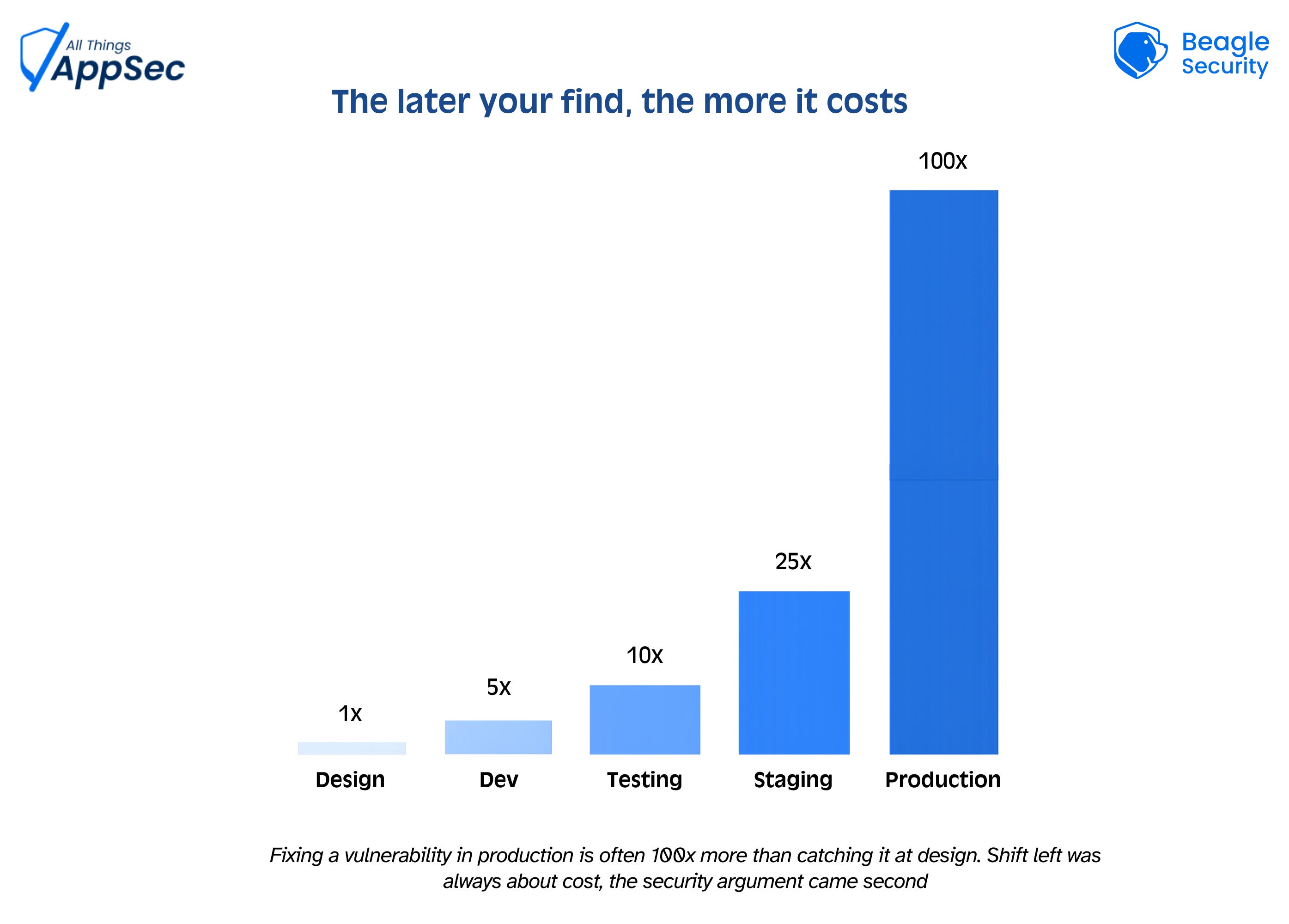
Somewhere in the mid 2010s, the entire security industry collectively decided that waiting until production to solve vulnerabilities was a problem. So the fix? Move security earlier, test during development and catch it before it ships.
Smart idea honestly, hard to argue with. Everyone bought into this.
And yet, critical vulnerabilities are still showing up in production. Teams are still having those ‘how did this make it through’ conversations weeks after shipping. The mantra spread but the habit didn’t.
So the question is, what happened?
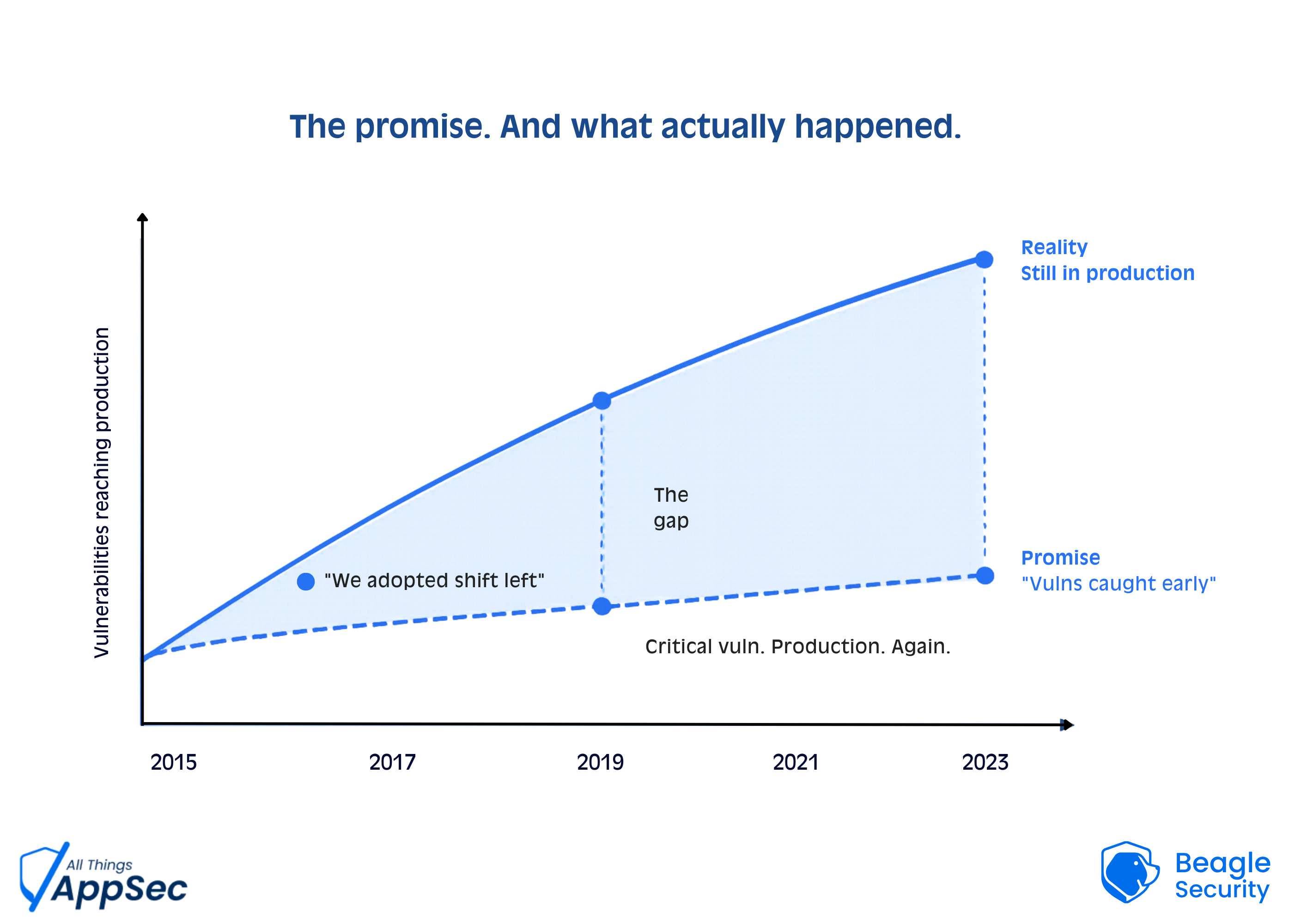
The tools showed up. Developers didn’t.
Shift left got treated as a tooling problem. Buy the right scanner, plug it into the pipeline and call it a day. Security shifted, apparently.
Except developers started drowning in alerts. Hundreds of findings per scan and most of them were noise. Misconfigurations that don’t even apply, libraries nobody’s actually using, stuff flagged as critical that really isn’t. False positives aren’t just annoying though, they also kill trust. Once a developer figures out that most alerts are garbage, they start treating all alerts like garbage. And then the one real thing sits ignored in a queue for three weeks.
Nobody thought about how developers actually work.
Developers work in sprints, two weeks, ship something, move on. Security testing was built around a completely different rhythm, one with long engagements, big reports and findings dropped at the end of a cycle that nobody really asked for in the first place.
Those two things just don’t fit.
If a security test takes longer than a sprint, developers are already three features ahead by the time results come back. Fixing a vulnerability in code you wrote six weeks ago, in a feature that’s already been built on top of, that’s not ‘shift left’.
The friction nobody talks about.
Even when the tooling works and the timing is fine, there’s something subtler going on. Security is asking developers to care about something they were never really trained for. It’s not because they’re careless, but because their job is to ship. Every hour spent on a security finding is an hour off a feature due Friday. Security and speed feel like opposites, and until that’s sorted at a structural level, shift left just becomes something you say in standups and ignore.
So what makes it actually stick?
A few things, and none of them are revolutionary.
Testing needs to run automatically as part of how developers already work, not as a separate step someone schedules and forgets about until the next sprint review.
The results need to be usable on the same day too. Not a 200 page PDF that lands in someone’s inbox on a Friday but something that shows what’s broken, where it is, how serious it is and what to do about it before the next standup.
The coverage needs to go deeper than surface scans. Authenticated flows, business logic, the stuff that only shows up once you’re actually inside the app rather than knocking on the door.
Most teams have one or two of these. Getting all of them in the same place is where shift left actually starts working and honestly that’s the part the industry has been slow to figure out.
It’s also the part that we’ve always cared most about getting right at Beagle Security. Not another scanner throwing noise into the void, but something that actually fits into how dev teams already move. Automatic testing on every build, findings developers can actually act on, and coverage that goes deeper than a surface scan.
Shift left was always the right call. The execution just needed to catch up.
Is shift left actually working on your team, or is it just another thing that lives in a doc nobody reads? We’re genuinely curious.